

Quick Answer
An effective outdoor living brand awareness strategy is defined by three connected pillars: social-first creator content, emotional lifestyle storytelling, and integrated multi-channel distribution. Brands like Thermacell, Timberland, BREEO, and Trex have each proven that homeowners and outdoor enthusiasts respond to marketing that feels like entertainment, not advertising. The gap between brands that grow recognition and those that stall comes down to whether they treat awareness as infrastructure or as a seasonal campaign. This guide breaks down exactly what works, why it works, and how you can apply it.
How do creator-led and social-first campaigns build outdoor brand awareness?
Creator-led campaigns are the most cost-effective way to build outdoor brand recognition at scale. They work because the content feels native to the platform and the creator’s audience already trusts their recommendations. When a brand appears in that context, it inherits that trust.
Thermacell’s partnership with Born Social demonstrates this precisely. The brand needed to connect with outdoor enthusiasts ahead of mosquito season, so it built a fully integrated strategy combining performance creative with influencer content designed to entertain first and sell second. The result was content that lived naturally in social feeds rather than interrupting them.

The key to making this work is creator selection. Nano and micro-influencers, typically those with 1,000 to 50,000 followers, generate higher engagement rates than celebrity accounts because their audiences are more focused and loyal. Timberland’s always-on UGC program uses 10 nano creators across Europe and achieves Instagram engagement rates exceeding 5%. That number matters because average brand accounts typically see engagement below 1%. Higher engagement signals that the content is resonating, not just reaching.
What separates a good creator strategy from a great one is continuity. One-off seasonal campaigns create a spike and then silence. Timberland’s approach commissions content continuously throughout the year, reusing and repurposing the best-performing pieces across paid and organic channels. That always-on model reached over 20 million users and generated more than 30 million views, with organic testing preceding paid amplification to reduce wasted spend.
Best practices for outdoor lifestyle marketing through creators include:
- Brief creators early. Seasonal outdoor products need content planned 6 to 8 weeks before peak season to allow for production, review, and organic testing.
- Prioritize platform-native formats. Reels, Stories, and Pinterest Idea Pins each have distinct audience behaviors. Content built for one format rarely performs well on another.
- Use localized content. A creator in the Pacific Northwest speaks differently about outdoor living than one in the Southeast. Regional authenticity increases relevance.
- Test organic before paying to amplify. Timberland’s model proves this works. Let content find its audience first, then put budget behind what already performs.
Pro Tip: When briefing creators for outdoor product campaigns, share three to five lifestyle scenarios rather than a product script. Creators who understand the context produce content that feels real, and that authenticity is what drives engagement.
What role do multi-channel national campaigns and sponsorships play in outdoor brand visibility?
National campaigns and sponsorships serve a different function than creator content. Where creator campaigns build trust at the individual level, broadcast and sponsorship campaigns build category authority at scale. For homeowners considering a significant outdoor purchase, seeing a brand across multiple trusted channels reinforces credibility.
Trex’s 2026 “Performance-Engineered” campaign is the clearest current example of this approach. The campaign spans national broadcast TV, streaming platforms, audio channels, and digital media simultaneously. It also includes sponsorships with HGTV Dream Home and the American Century Championship golf event. These placements are not accidental. HGTV reaches homeowners actively planning outdoor renovations, and golf audiences skew toward the high-income demographic most likely to invest in premium outdoor living products.
“Trex’s 2026 campaign shows that outdoor brands with serious awareness goals do not choose between digital and traditional media. They use both, and they use sponsorships to reach audiences who are already in the right mindset.”
The data supports this media mix. Nielsen reports that 74% of TV time is spent on ad-supported content, which means streaming and broadcast remain high-reach environments even as viewing habits shift. That statistic justifies the budget allocation toward channels that many digital-first marketers have written off.
| Channel type | Primary benefit | Best for |
|---|---|---|
| Broadcast and streaming TV | Mass reach and brand credibility | Established brands with national distribution |
| Audio (podcast and radio) | Contextual relevance during outdoor activities | Seasonal product launches |
| Digital paid media | Precision targeting and retargeting | Converting warm audiences |
| Lifestyle sponsorships (HGTV, golf) | Audience alignment and trust transfer | Premium product positioning |
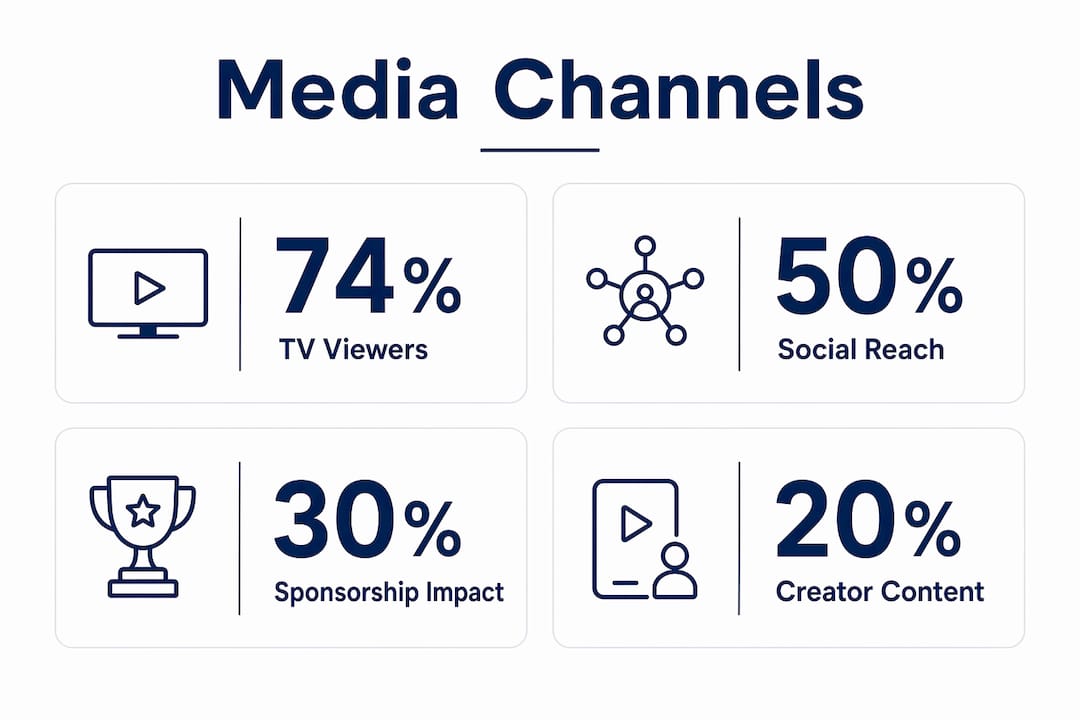
The table above reflects how effective outdoor promotion strategies allocate media spend. No single channel dominates. The combination creates multiple touchpoints that move a homeowner from unaware to familiar to ready to buy.
How does emotional storytelling differentiate outdoor living brands?
Emotional storytelling is the mechanism that separates brands with loyal communities from brands with just customers. Product specs describe what something does. Emotional storytelling explains why it matters to someone’s life.
BREEO built a fire pit brand worth over $100 million not by leading with materials or engineering, but by selling the feeling of gathering around a fire with family. Their content focuses on sensory details: the sound of crackling wood, the warmth of the flame, the quiet of an evening outside. Those details create an atmosphere that product photography alone cannot replicate. Outdoor brands that sell lifestyles and atmospheres create stronger emotional brand equity than those focused solely on product specs.
BREEO’s influencer strategy reinforces this positioning. Rather than partnering with outdoor gear reviewers or technical product testers, they work with lifestyle and family creators whose audiences already value the rituals BREEO is selling. The product appears in context, not in a review. That distinction changes how the audience receives it.
The contrast with price-led or spec-led messaging is stark. A brand that leads with “weather-resistant composite decking” is speaking to a buyer already deep in the research phase. A brand that shows a family dinner on a beautiful deck at sunset is speaking to a homeowner who has not yet started shopping but now wants what they just saw. Emotional storytelling creates demand. Spec messaging captures it.
Key elements of effective emotional storytelling for outdoor brands include:
- Sensory content. Show and describe what the experience feels like, not just what the product looks like.
- Ritual framing. Position the product as part of a recurring life moment, not a one-time purchase.
- Family and community imagery. Outdoor living is inherently social. Content that shows people together performs better than solo product shots.
- Aspirational but achievable. The lifestyle shown should feel within reach for your audience, not unattainably luxurious.
Pro Tip: Before writing a single piece of content, write one sentence that describes the feeling your brand creates, not the product it sells. Every piece of content you produce should connect back to that sentence.
What steps are needed to execute an outdoor brand awareness strategy?
Executing a brand awareness strategy for outdoor living products requires a clear framework before any content is produced or media is bought. Without that foundation, campaigns feel disconnected and measurement becomes impossible.
Start with a positioning framework built around three questions. Who is your specific target? What makes you different from alternatives? Why should someone believe that claim? Outdoor brands that define these three elements before launching campaigns maintain more consistent messaging and stronger top-of-mind awareness over time. This is the standard industry practice for brand positioning, and skipping it is the most common reason awareness campaigns underperform.
Once positioning is clear, build your content engine with these steps:
- 1Identify two to four creator profiles that match your lifestyle positioning, not just your product category. A fire pit brand should work with family and entertaining creators, not just outdoor gear reviewers.
- 1Set a content cadence that runs year-round, not just during peak season. Timberland’s always-on model proves that continuous output outperforms seasonal bursts.
- 1Allocate budget across three buckets: organic content production, paid amplification of top-performing content, and sponsorship or media placements for broad reach.
- 1Test on organic channels first. Publish creator content without paid support, measure engagement and saves, then amplify the pieces that already show traction.
- 1Track the right metrics. For awareness campaigns, prioritize reach, engagement rate, share rate, and branded search volume growth. Conversion metrics matter later in the funnel.
For platform selection, Instagram and Pinterest are the two highest-value channels for outdoor living brands. Instagram drives real-time engagement and creator content distribution. Pinterest drives purchase intent research, with users actively saving ideas for future projects. A brand that appears on both platforms covers both the inspiration and the planning phases of the homeowner journey. Understanding how to rank in AI search results is also becoming relevant as more homeowners ask AI tools for product and brand recommendations before visiting any website.
Key takeaways
A successful outdoor living brand awareness strategy requires always-on creator content, emotional lifestyle positioning, and a media mix that spans both social and broadcast channels.
| Point | Details |
|---|---|
| Creator continuity beats seasonal bursts | Always-on UGC programs like Timberland’s outperform one-off campaigns in reach and engagement. |
| Emotional storytelling builds demand | Brands like BREEO grow by selling feelings and rituals, not product specifications. |
| Multi-channel reach builds credibility | Trex’s 2026 campaign combines TV, streaming, audio, and sponsorships to reach homeowners at multiple touchpoints. |
| Nano creators deliver higher engagement | Timberland’s nano creator program exceeded 5% Instagram engagement, far above typical brand account averages. |
| Positioning clarity precedes all execution | Defining your audience, differentiation, and reason to believe is the required first step before any content or media spend. |
What I have learned about outdoor brand awareness that most guides skip
The brands that consistently grow outdoor recognition share one trait that rarely appears in marketing playbooks: they treat content production as a permanent operating cost, not a project budget. Most brands think in campaigns. The ones that win think in infrastructure.
I have seen brands spend heavily on a single launch campaign, generate real awareness, and then go quiet for six months. That silence erodes everything the campaign built. Awareness is not a state you achieve. It is a state you maintain through continuous presence.
The other thing worth saying directly is that reach is not the goal. Relevance is. A creator with 8,000 followers who speaks authentically to your exact customer is worth more than a celebrity post that reaches millions of people who will never buy outdoor furniture. Thermacell’s approach with Born Social understood this. They chose a partner who could translate a real consumer frustration into content that felt genuinely useful, not just visible.
The shift from product-centric to lifestyle-centric messaging is also not optional anymore. Homeowners are not searching for “composite decking specs.” They are searching for “backyard ideas” and “outdoor entertaining inspiration.” If your content does not show up in those moments, your brand does not exist in that decision process.
Finally, the platforms are changing faster than most brand calendars account for. AI search tools are now part of how homeowners discover products and brands. Brands that structure their content to be cited by AI engines will have a compounding advantage over those still optimizing only for traditional search.
How Click Track Marketing helps outdoor brands grow visibility
Building a brand awareness strategy that actually produces measurable results takes more than good content ideas. It takes the right infrastructure behind them.
Click Track Marketing is a San Diego-based agency that builds the marketing infrastructure outdoor living brands need to get found, stay visible, and prove what their spend is earning. From AI-structured content strategies to paid media grounded in attribution, the work is designed to show you exactly which efforts are producing customers. If you are ready to move beyond impressions and into real revenue accountability, visit Clicktrackmarketing to see how the agency approaches brand awareness for outdoor and home products.
Want to know exactly which marketing is making you money?
Get a free attribution audit — we'll show you where your leads and revenue actually come from. Answer two quick questions to start.