

Quick Answer
A remodeling company paid media strategy is a structured approach to buying advertising placements across platforms like Google Ads and Google Local Services Ads (LSA) to generate qualified leads at a measurable cost. The industry term for this discipline is paid search and paid social advertising, though most remodeling owners simply call it "running ads." What separates a real strategy from random spending is channel selection, campaign structure, and attribution. Google LSAs alone deliver a 49% lower cost per lead than traditional pay-per-click ads, which means the channel you choose determines your profit margin before a single lead calls you. Combining LSAs with well-structured Google Ads PPC campaigns, CRM tracking, and response protocols is how remodeling companies turn ad spend into closed jobs.
Why Google Local Services Ads are the backbone of remodeling paid media
Google Local Services Ads are the highest-value paid media channel available to remodeling companies right now. They appear above both traditional Google Ads and organic results, and Google charges you only when a verified lead contacts you directly. That pay-per-lead billing model removes the waste built into traditional cost-per-click campaigns, where you pay for every click regardless of intent.
The numbers make the case clearly. LSA cost per lead averages $53 compared to $104 for traditional Google Search Ads. That gap compounds when you factor in conversion rates. LSA leads convert to booked jobs at 43.9%, versus 37.6% for non-branded search ads. The result is a cost per paying customer of $233 on LSA versus $804 on traditional PPC, a 71% reduction in what you spend to close one job.

| Metric | Google LSA | Traditional Google Ads |
|---|---|---|
| Average cost per lead | $53 | $104 |
| Lead-to-booked-job rate | 43.9% | 37.6% |
| Cost per paying customer | $233 | $804 |
LSA setup requires Google's verification process, which includes a background check, license verification, and insurance confirmation. That friction is actually an advantage. It filters out unverified competitors and signals trust to homeowners searching for contractors. Once verified, your profile displays the "Google Guaranteed" badge, which increases click confidence significantly.
Pro Tip: Complete your LSA profile with photos of finished projects, a detailed service description, and at least 10 reviews before going live. Profiles with more content receive better placement from Google's algorithm before you spend a dollar.

Running LSAs alongside traditional Google Ads captures two distinct customer segments simultaneously. LSAs target high-intent local searchers ready to book. PPC expands your reach across broader keywords and geographies. Together, they increase total lead volume without a proportional increase in cost.
How to structure an effective PPC campaign alongside LSAs
Google Ads PPC remains a critical part of any marketing strategy for remodelers because it gives you control over keywords, geography, ad copy, and bidding that LSAs do not offer. The key is structure. Poorly organized campaigns bleed budget on irrelevant clicks. Well-structured campaigns pay only for searches that match your actual services.
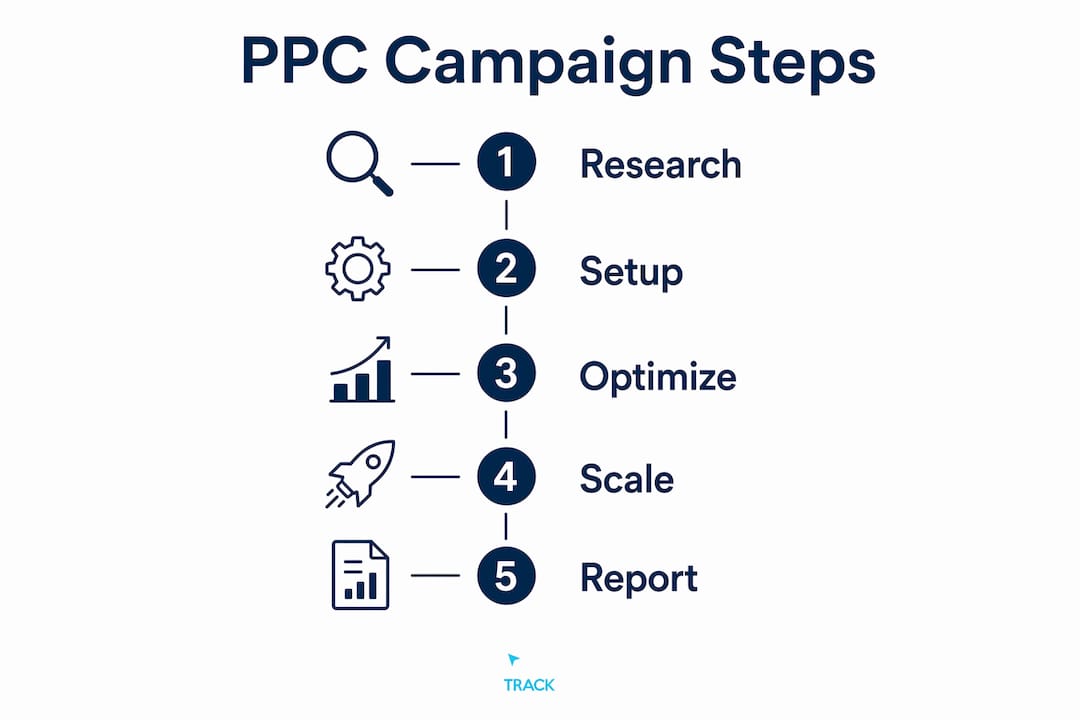
Start with campaign segmentation by renovation type and geography. Create separate ad groups for kitchen remodeling, bathroom renovation, whole-home additions, and any other core service. Within each group, use commercial and geographic keyword modifiers to tighten relevance. "Kitchen remodel contractor San Diego" converts at a higher rate than "kitchen remodel" because the searcher has already indicated location and purchase intent. Limit each ad group to 10 to 15 tightly related keywords to maintain a high Quality Score, which directly lowers your cost per click.
Follow a phased bidding approach as your campaign matures:
- 1Weeks 1 to 4: Use manual CPC bidding. This gives you direct cost control while the campaign collects data. Set conservative bids and monitor search term reports daily to identify irrelevant queries.
- 2Weeks 5 to 12: After accumulating 30 or more conversions, transition to target CPA bidding. Google's algorithm now has enough data to optimize delivery toward your cost-per-acquisition goal.
- 3Month 4 and beyond: Once you have CRM data connecting ad spend to closed job revenue, shift to target ROAS bidding. This tells Google to prioritize leads that historically produce the highest contract values.
Ad extensions are not optional. Call extensions with a local phone number increase click-through rate, and leads generated by phone calls convert at four times the rate of form submissions. Avoid premium-rate numbers. They reduce click-through rate by 30% because searchers recognize and distrust them. Add location extensions, sitelink extensions pointing to your project gallery and service pages, and callout extensions highlighting your license, warranty, or years in business.
Pro Tip: Add a robust negative keyword list before your campaign goes live. Terms like "DIY," "free estimate template," "how to remodel yourself," and competitor brand names will drain budget fast if left unchecked.
Budget allocation for a new PPC campaign should start at $1,500 to $3,000 per month in a mid-size market. Scale only after you have stable cost-per-lead data. Scaling before that point means scaling inefficiency.
What tools and tracking does a remodeling paid media campaign need?
Paid media for contractors without proper tracking is just spending money. The measurement layer is what turns ad spend into a repeatable system. You need three components working together: platform dashboards, call tracking, and CRM integration.
Google Ads and the LSA dashboard give you platform-level data: impressions, clicks, leads, and cost. That data tells you what is happening inside the ad platform. It does not tell you which leads became paying customers or what those customers were worth. That gap is where most remodeling companies lose visibility.
- Call tracking software (such as CallRail or CallTrackingMetrics) assigns unique phone numbers to each campaign or ad group. You can hear recorded calls, measure call duration, and flag qualified leads. This data feeds back into Google Ads as conversion events, improving automated bidding accuracy.
- CRM integration connects lead source data to job outcomes. When you track lead source through to revenue, you can calculate cost per closed job by channel, not just cost per lead. That distinction matters because a $200 lead that closes at 20% is more expensive than a $300 lead that closes at 60%.
- Automated reporting dashboards pull data from Google Ads, LSA, your CRM, and call tracking into one view. Clicktrackmarketing's PeopleLytics platform does exactly this, delivering a weekly revenue attribution report that shows which campaigns produced actual customers.
Response speed is a tracking metric that most remodeling companies ignore entirely. 74.1% of contractor calls go unanswered, and Google's LSA algorithm factors response rate directly into ad rank. Slow response means lower placement and higher cost per lead. Faster response means better rank, more leads, and lower cost. This is one of the highest-leverage improvements any remodeling company can make without changing a single campaign setting.
| Tracking Layer | Tool Examples | What It Measures |
|---|---|---|
| Platform data | Google Ads, LSA dashboard | Clicks, leads, cost per lead |
| Call tracking | CallRail, CallTrackingMetrics | Call volume, lead quality, response rate |
| Revenue attribution | CRM + PeopleLytics | Cost per closed job, channel ROI |
Common mistakes remodeling companies make in paid media
Most paid media failures in the remodeling sector come from the same small set of errors. Recognizing them before you launch saves significant budget.
- Ignoring lead response time. As noted above, unanswered calls damage LSA rank and increase cost per lead. Set a policy: every inbound lead gets a response within five minutes during business hours.
- Running one broad campaign for all services. A single campaign mixing kitchen remodels, bathroom renovations, and room additions produces low Quality Scores and high CPCs. Segment by service type from day one.
- Using generic keywords without commercial intent. Broad terms like "home renovation" attract researchers, not buyers. Phrases like "bathroom remodel contractor near me" or "kitchen addition cost estimate" signal purchase intent and produce better leads at lower cost.
- Not connecting leads to closed jobs. Tracking cost per lead without tracking cost per closed job means you cannot identify your most profitable channel. Integrate your CRM before you spend your first dollar on ads.
- Underinvesting in LSAs. Many remodeling companies skip LSAs because the setup process feels unfamiliar. That hesitation is expensive. The lead quality and cost advantage LSAs provide over traditional PPC is substantial enough to make them the first channel you should activate, not the last.
“The single most common reason remodeling paid media campaigns underperform is not the ad copy or the budget. It is the absence of a system to respond to leads quickly and track what happens to them afterward.”
How to scale and refine your strategy over time
Scaling a remodeling paid media strategy follows a clear sequence. Moving too fast before the data is stable wastes money. Moving too slowly after stability is proven leaves revenue on the table.
- 1Confirm stable cost per acquisition first. Before increasing budget, verify that your cost per closed job has been consistent for at least 60 days. Consistency means the system is working, not just getting lucky.
- 2Expand geography methodically. Once your home market is performing, add adjacent service areas one at a time. Create separate campaigns or ad groups for each new geography to maintain relevance and track performance independently.
- 3Add dynamic remarketing. Visitors who viewed your project gallery or service pages but did not convert are warm prospects. Remarketing ads on Google Display Network and YouTube keep your brand visible during their decision period, which for remodeling projects can last weeks or months.
- 4Implement conversion value tracking. Feed actual job revenue from your CRM back into Google Ads as conversion values. This enables target ROAS bidding, which tells Google to prioritize leads that historically produce your highest-value contracts.
- 5Build your LSA review volume continuously. Review volume and star rating directly influence LSA ad rank. Businesses with high review counts and 4.8-star ratings receive significantly more leads at no additional cost. Request reviews from every completed job as a standard operating procedure. You can find a detailed framework for this in the local SEO checklist for remodeling companies.
Scaling works because the underlying data gets richer over time. More conversion data means smarter automated bidding. More reviews mean better LSA placement. More CRM history means more accurate ROAS targets. The system compounds when you build it correctly from the start.
Key takeaways
A remodeling company paid media strategy produces the lowest cost per closed job when Google Local Services Ads, structured PPC campaigns, and CRM-based revenue attribution operate as one connected system.
| Point | Details |
|---|---|
| LSAs outperform traditional PPC | Cost per paying customer drops from $804 to $233 when LSAs replace or supplement standard Google Ads. |
| Campaign structure determines cost | Segmenting by service type and geography lowers CPC and improves lead quality from day one. |
| Response speed affects ad rank | Answering calls quickly improves LSA placement and reduces cost per lead directly. |
| CRM integration closes the loop | Connecting lead source to closed job revenue is the only way to know which channel is actually profitable. |
| Reviews drive LSA scale | Consistent review volume and high ratings increase LSA rank without increasing ad spend. |
What I have seen working in remodeling paid media
The remodeling companies that grow fastest from paid media share one trait: they treat responsiveness as a marketing function, not an operational afterthought. I have seen campaigns with excellent structure and reasonable budgets underperform simply because no one answered the phone. Google sees that. Your cost per lead goes up. Your ad rank drops. The fix costs nothing except process discipline.
The other pattern I keep seeing is over-reliance on a single channel. Organic search, referrals, and home service platforms each have real limits. A well-built paid media system, combining LSAs for high-intent local leads with PPC for broader keyword coverage, removes those limits. When you add CRM attribution on top, you stop guessing and start knowing which dollars are producing revenue. That shift from guessing to knowing is where remodeling businesses find their real competitive edge. You can see what that looks like in practice through the Lifetime Custom Painting case study, where integrated Google Ads and LSA management produced measurable revenue growth in a remodeling-adjacent market.
The businesses that win are not the ones with the biggest budgets. They are the ones who can see clearly what is working and act on it faster than their competitors.
How Clicktrackmarketing builds paid media infrastructure for remodelers
Clicktrackmarketing builds paid media systems for remodeling companies that connect ad spend directly to revenue. That means LSA setup and management, structured Google Ads campaigns, call tracking integration, and the attribution layer that shows you cost per closed job, not just cost per lead.
The proprietary PeopleLytics dashboard delivers a weekly report showing exactly which campaigns produced customers and what those customers were worth. BuyerSignals surfaces in-market intent data so you know who is actively looking for remodeling services right now. If you want to understand how the full system works, the AI marketing full-funnel system page walks through every component. This is infrastructure built to produce measurable revenue, not vanity metrics.
Want to know exactly which marketing is making you money?
Get a free attribution audit — we'll show you where your leads and revenue actually come from. Answer two quick questions to start.