
Quick Answer
An outdoor project upsell opportunities list is a defined set of add-on services and upgrades that contractors present alongside a base project quote to increase total job value. The most effective add-ons, including pergolas, landscape lighting, fire features, and built-in seating, can lift project value by 55, 78% on a single job. For a contractor running a $18,000 composite deck install, that math translates to a $28,000, $32,000 project with the right additions. The industry term for this practice is value-based upselling, and when structured correctly, it reduces client resistance and increases satisfaction at the same time.
1. which outdoor project upsell opportunities offer the highest return?
The highest-return add-ons for outdoor contractors are landscape lighting and pergolas. Lighting and pergolas can increase average project value by 30, 50% for contractors who already have base installation skills. That makes them the logical starting point before moving into more complex additions.
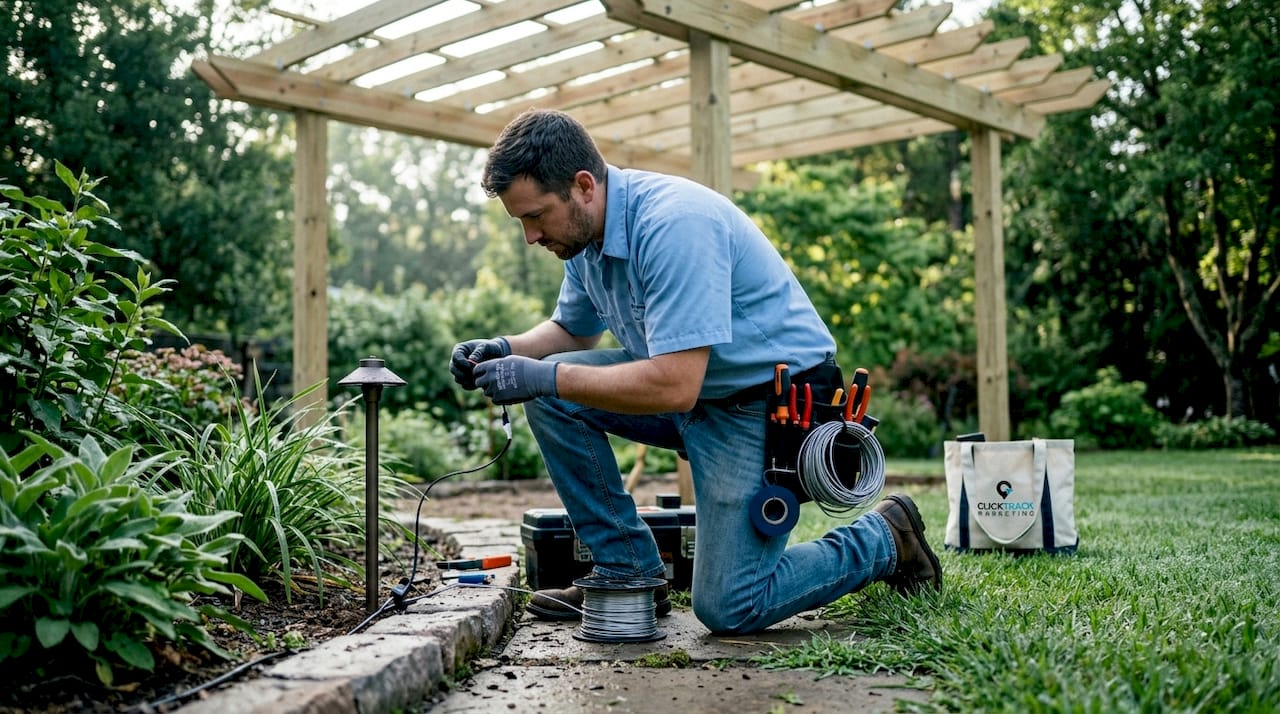
Margins vary significantly across add-on categories. Lighting carries the best margins at 40, 55%, followed by built-in seating at 35, 50%. Attached wood pergolas run 30, 40%, while full outdoor kitchens drop to 20, 30% due to material and subcontractor costs. Knowing these numbers helps you prioritize what to present first.
The table below compares common upsells by margin range and typical project value impact:
| Add-On | Margin Range | Typical Project Value Impact |
|---|---|---|
| Landscape Lighting | 40, 55% | High |
| Built-In Seating | 35, 50% | Medium-High |
| Attached Pergola (Wood) | 30, 40% | High |
| Fire Pit or Fire Feature | 30, 40% | Medium |
| Full Outdoor Kitchen | 20, 30% | Very High |
| Decorative Paver Art | 35, 45% | Medium |
| Seat Walls and Pillars | 30, 40% | Medium |
Start with lighting and pergolas. They are accessible to most crews, carry strong margins, and homeowners respond to them visually during the proposal stage.
2. how to structure proposals to maximize upsell acceptance
The most effective proposal structure presents the base scope first, then lists 3, 5 optional enhancements as separate line items at the bottom of the quote. This format lets clients self-select without feeling pressured. It also removes the need for live negotiation on each item.
Framing matters as much as format. When add-ons appear as standard choices that most clients consider, they stop feeling like extras. They become part of the normal decision process. Normalizing add-ons by citing what other clients typically choose reduces objections before they start.
Key structural elements that improve acceptance rates:
- Separate line-item pricing for every add-on so clients can approve or remove items without renegotiating the whole quote
- Photos or visual references attached to each add-on line item so clients can picture the finished result
- Financing framing on projects above $5,000, presenting the upgrade cost as a monthly payment rather than a lump sum
- Consistent add-on categories across every proposal so clients recognize the pattern and trust the process
Pro Tip: Take clients to a showroom or bring a photo catalog to the site visit. According to Hardscape Magazine, visual examples at selection time significantly improve client confidence and reduce decision friction.
The financing reframe is particularly effective on larger projects. A $4,000 pergola add-on presented as roughly $80 per month over five years is a fundamentally different conversation than a $4,000 line item on a quote.
3. what upsell items work best for patios and hardscapes?
Patio and hardscape projects carry four routine upsell categories that experienced contractors include in nearly every quote: pillars and seat walls, lighting, fire features, and decorative paver art. Patio quotes that include separate pricing and photos for each of these categories generate higher acceptance rates because clients can evaluate each item independently.
Operational efficiency matters here. One shift that improves margins significantly is bringing lighting installation in-house rather than subcontracting it. Hardscape Magazine notes that contractors who install lighting in-house gain both margin control and scheduling flexibility. That change alone can move lighting from a low-priority add-on to one of your most profitable line items.
Specific patio upsell items to include in every proposal:
- Pillars and seat walls to define the space and add structural character
- Low-voltage landscape lighting for ambiance and safety, with high in-house margins
- Fire pits and fire features as a strong visual anchor that homeowners respond to emotionally
- Decorative paver art including borders, inlays, and color blends that differentiate the finished product
Pro Tip: Use failure-prevention language to justify higher specifications. Explaining that base compaction and edge restraint directly affect how long the patio lasts shifts the conversation from price to quality. Clients who understand the risk of shortcuts are far more likely to approve the better option.
On the technical side, proper base extension is a credible talking point. A compacted base should extend 6, 12 inches beyond the edge restraint, with 4 inches minimum for pedestrian areas and 6 inches for residential driveways. Showing clients this standard, and explaining that low bids often skip it, is one of the most effective ways to defend your price and justify upgrades.
4. how annual and seasonal services create recurring revenue streams
Recurring add-on services are the most underused outdoor project revenue stream in the contractor market. Packaging seasonal services around lighting installs, irrigation checkups, and spring or fall cleanups generates steady revenue between larger projects. These services also protect the work you already installed, which gives clients a clear reason to say yes.
The framing shift is simple. Position recurring services as project protection, not ongoing expenses. A client who spent $30,000 on a patio and outdoor kitchen is motivated to maintain it. Seasonal lighting swaps, irrigation system checks, and paver sealing all fit naturally into that conversation.
Recurring service categories worth packaging:
- Seasonal lighting installation and takedown for holiday or event lighting with annual contracts
- Irrigation startup and winterization as a twice-yearly service tied to the original system install
- Annual paver sealing and cleaning to protect hardscape investments and maintain appearance
- Spring and fall cleanup packages that include mulching, pruning, and debris removal
GetJobber's research confirms that recurring service packages provide steady client engagement and protect previous project investments. The business case is straightforward. A client on an annual maintenance contract is far less likely to call a competitor for the next project.
5. what presentation and communication strategies boost upsell success?
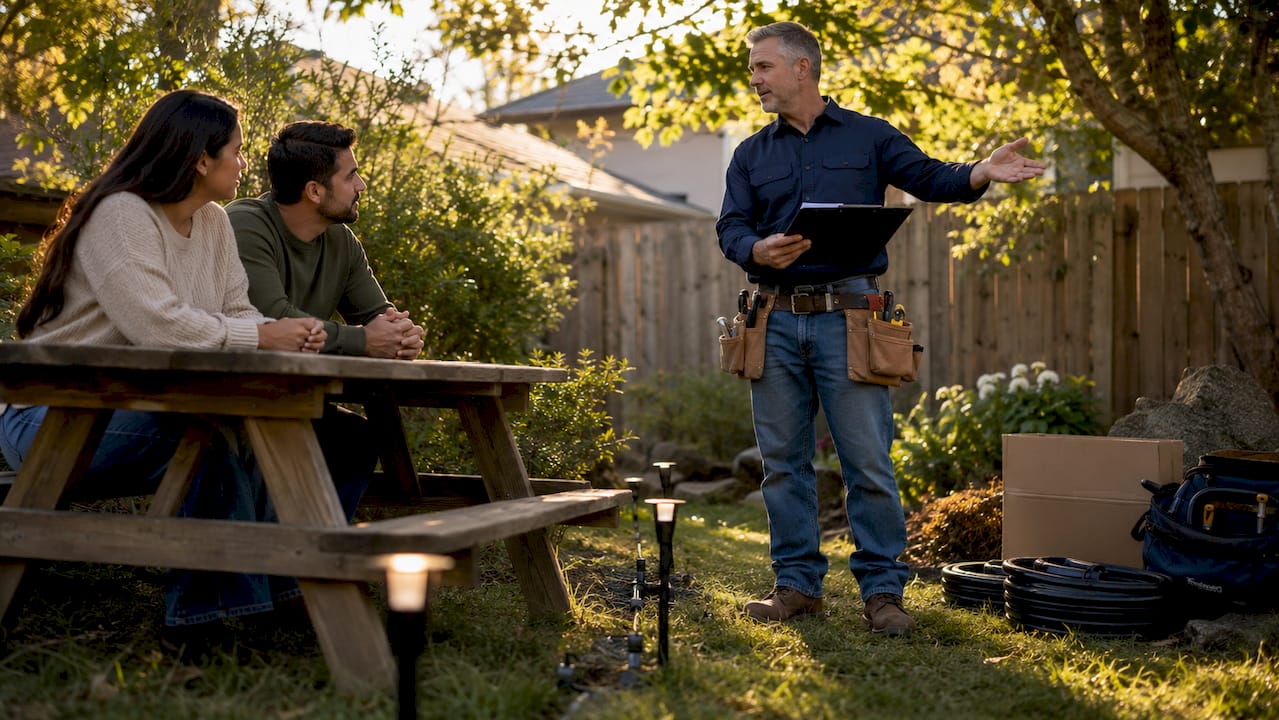
The Good/Better/Best tier structure is the most reliable framework for presenting outdoor project upgrades. Pulse Sales Trainings recommends designing the project in the yard with the homeowner present, then walking through material tiers before finalizing the quote. This approach connects the upgrade to something the client can see and touch, which makes the decision concrete rather than abstract.
Showing clients what low bids hide is equally important. Most homeowners do not know that a cheaper patio quote often skips proper base depth, edge restraint, or quality materials. Making those shortcuts visible turns your higher-spec proposal from an expensive option into a risk-reduction decision. That is a fundamentally different conversation.
Effective communication strategies for upsell presentations:
- Good/Better/Best material tiers presented in the yard so clients can visualize the difference
- Financing as a monthly payment on projects above $5,000 to reduce sticker shock on upgrades
- Social proof framing by citing what most clients in similar projects typically select
- Visual aids and showroom visits to reduce the cognitive gap between a line item and a finished result
“Upsells succeed best when aligned to what homeowners want to do and clearly show the value over low bids' shortcuts.”
The seasonal marketing checklist approach applies here too. Timing your upsell conversations to align with homeowner planning cycles, spring and early fall in most markets, increases receptivity before budgets are committed elsewhere.
Key takeaways
The most effective outdoor project upsell strategy combines high-margin add-ons like lighting and pergolas with a structured proposal format that lets clients self-select upgrades without pressure.
| Point | Details |
|---|---|
| Start with lighting and pergolas | These add-ons carry 30, 55% margins and are accessible to most crews. |
| Structure proposals with 3, 5 add-ons | Separate line items at the quote bottom reduce negotiation and improve acceptance. |
| Use failure-prevention language | Explaining base and edge restraint standards shifts the conversation from price to quality. |
| Package recurring seasonal services | Annual maintenance contracts protect client investments and generate steady revenue. |
| Present financing on larger upgrades | Monthly payment framing on projects above $5,000 improves conversion on better-tier options. |
What i have learned about upselling outdoor projects
The contractors I see winning consistently are not the ones with the longest add-on list. They are the ones who present the same five or six upgrades on every single quote, in the same order, with photos attached. That discipline does two things. It trains clients to expect options, and it trains crews to price them accurately.
Lighting is the one add-on I would tell every contractor to bring in-house immediately. The margin difference between subcontracting and self-installing is significant, and the skill curve is not steep. Once your team can quote and install low-voltage landscape lighting without a third party, your average job value goes up on nearly every project.
The other thing I have seen work consistently is the quality conversation. Homeowners in 2026 are more informed than they were five years ago. They have watched renovation content online, they have read reviews, and they know that cheap bids often mean shortcuts. When you walk a client through what proper base compaction looks like, and explain why a competitor's lower number probably skips it, you are not being pushy. You are being transparent. That transparency is what builds the trust that closes the upgrade.
The outdoor living brand awareness strategy piece matters here too. Contractors who document their upsell work with photos and case studies create a feedback loop where past projects sell future upgrades. That is not marketing for its own sake. It is infrastructure that makes every future proposal easier to close.
How Clicktrackmarketing helps outdoor contractors grow upsell revenue
Knowing which add-ons to offer is only half the equation. The other half is knowing which clients are most likely to buy them, and whether your marketing is actually producing those conversations.
Clicktrackmarketing builds the attribution infrastructure that connects your marketing spend to real project revenue. Tools like BuyerSignals surface intent data so you know who is actively planning an outdoor project right now. PeopleLytics ties it back to dollars in a weekly dashboard. If you want to know whether your upsell strategy is producing revenue, not just clicks, the AI marketing system behind our work is built to answer that question. You can also explore how AI lead tracking works specifically for outdoor contractors.
Want to know exactly which marketing is making you money?
Get a free attribution audit — we'll show you where your leads and revenue actually come from. Answer two quick questions to start.