

Quick Answer
Retargeting is defined as a paid advertising method that serves ads specifically to users who have already visited your website, placing your brand back in front of people who showed real interest but did not convert. For outdoor companies, this technique is the difference between a one-time browse and a completed sale. Platforms like Google Ads remarketing and Meta Custom Audiences make it possible to re-engage hikers researching trail gear, campers comparing tents, or kayakers who added a paddle to their cart and left. Understanding how retargeting works for outdoor companies means understanding behavioral data, platform mechanics, and the seasonal rhythms that drive outdoor purchase decisions.
How retargeting works for outdoor companies on google and meta
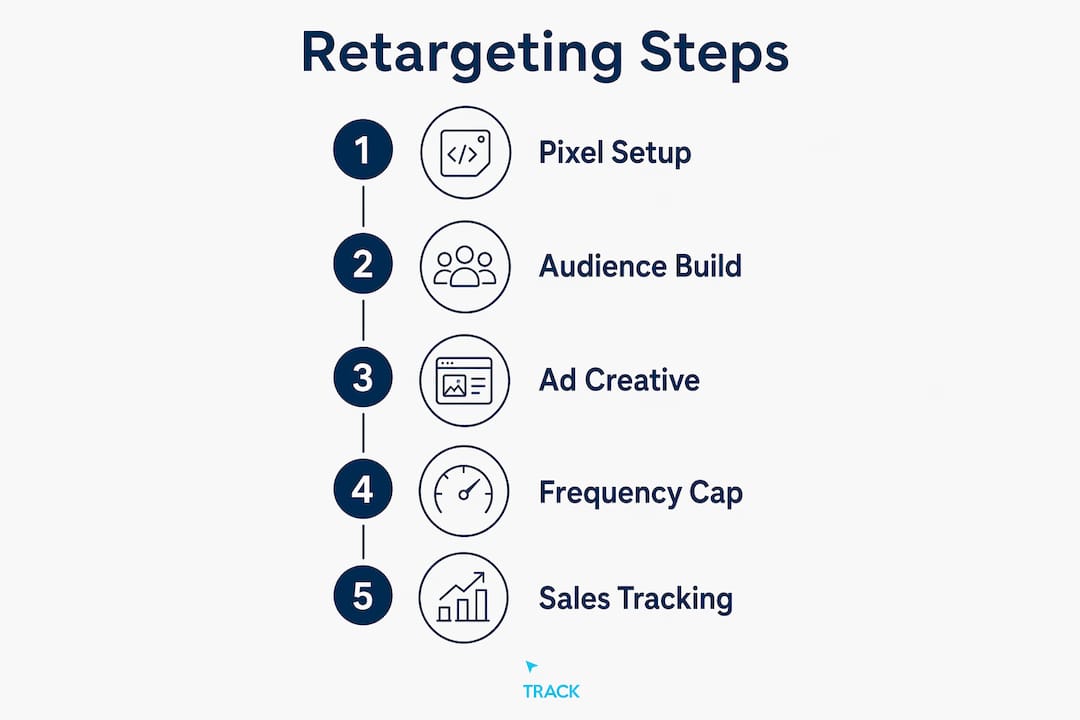
Retargeting works by placing a tracking pixel on your website that records visitor behavior and builds audiences you can advertise to later. On Meta, these audiences are called Custom Audiences, built from pixel events, Conversions API signals, and uploaded customer lists. Google Ads uses remarketing lists that follow visitors across the Google Display Network and YouTube.

The most important shift in platform mechanics happened after Apple's iOS 14 update. Pixel tracking alone can shrink audience match rates by 60, 70%. That means a significant portion of your past visitors simply disappear from your retargeting pools if you rely only on browser-based pixels. The fix is server-side tracking through Meta's Conversions API, connected to your CRM with hashed email matching and regular syncs.

Meta segments audiences by funnel stage using standard ecommerce events. The four core events are ViewContent, AddToCart, InitiateCheckout, and Purchase. Each one represents a different level of intent, and each one deserves a different ad message. A visitor who viewed a product page needs brand reinforcement. A visitor who abandoned checkout needs a direct offer or a reason to trust you.
Google Ads remarketing works differently. Membership duration should match the outdoor customer's research cycle, typically 7, 90 days. A customer buying a $40 water filter moves fast. A customer buying a $1,200 kayak researches for weeks. Build separate lists for each window and bid accordingly.
- ViewContent audiences: Users who browsed product or category pages
- AddToCart audiences: Higher intent, shorter window, more aggressive bids
- Checkout abandoners: Highest intent, deserves your best offer
- Past purchasers: Exclude from acquisition campaigns, target with upsell or loyalty messaging
Pro Tip: Connect your email service provider to Meta Custom Audiences and sync it weekly. This keeps your retargeting pools accurate even when pixel data degrades.
What retargeting strategies work best for outdoor brands?
Outdoor companies face a challenge most e-commerce brands do not. Purchase intent is tied to weather, seasons, and weekend plans. A retargeting strategy that ignores these factors will waste budget on users who are not in a buying mindset.
Outdoor retargeting performs best when scheduling aligns with user motivation driven by weather and calendar timing. Hikers research on weekday evenings and convert from Thursday night through Saturday morning. Running ads at full budget on Tuesday afternoon for a trail gear brand is a measurable waste of spend.
Here is a practical framework for timing your outdoor retargeting campaigns:
- 1Map your conversion windows. Pull your historical conversion data by day and hour. Most outdoor brands see a clear spike from Thursday evening through Saturday morning.
- 2Layer in weather triggers. Use weather-based ad scheduling through Google Ads or a third-party tool to increase bids when conditions in your target markets favor outdoor activity.
- 3Align remarketing windows with purchase cycles. A seasonal product like ski gear has a short research window in fall. A tent purchase may involve weeks of comparison. Set your audience membership durations to match.
- 4Segment by event type, not just recency. A user who viewed your hiking boot category three days ago is not the same as a user who abandoned checkout yesterday. Treat them differently.
- 5Adjust budgets for seasonal peaks. Spring and fall are high-intent seasons for most outdoor categories. Increase retargeting budgets before these windows open, not after.
Pro Tip: Build a simple calendar that maps your top product categories to their peak research and purchase months. Use it to set budget multipliers in Google Ads and Meta campaign schedules before each season starts.
You can also connect seasonal retargeting planning to a broader seasonal marketing checklist to make sure your campaigns are ready before demand peaks.
How do frequency caps and creative rotation improve results?
Frequency capping is the practice of limiting how many times a single user sees your ad within a given time period. Without it, retargeting campaigns burn budget and annoy the very people you are trying to convert.
The recommended range is 5, 7 impressions per user per week for retargeting campaigns, paired with at least three creative concepts rotated every 10, 14 days. Staying within this range keeps your brand visible without triggering the kind of fatigue that causes users to actively ignore or hide your ads.
Creative rotation is equally important. A single ad shown repeatedly loses effectiveness fast, especially in small retargeting pools where the same users see it over and over. Rotate at least three concepts that address different objections. One ad might focus on product quality. A second might highlight a guarantee or return policy. A third might feature a customer review or a use-case scenario like weekend backpacking.
| Audience Recency | Recommended Bid Adjustment | Frequency Cap | Creative Focus |
|---|---|---|---|
| 0, 7 days | Highest (+50% or more) | 7 impressions/week | Direct offer or urgency |
| 8, 14 days | High (+25, 40%) | 6 impressions/week | Social proof or reviews |
| 15, 30 days | Moderate (+10, 20%) | 5 impressions/week | Brand value or story |
| 31, 60 days | Low (+5, 10%) | 4 impressions/week | Category reminder |
| 61, 90 days | Minimal (baseline) | 3 impressions/week | Broad brand awareness |
Audience exclusions are just as important as inclusions. Overlapping audiences inflate CPMs and waste spend. Exclude recent purchasers from all acquisition-focused campaigns. Exclude your 7-day high-intent list from your 30-day broader list to prevent bidding against yourself. This structure keeps your spend focused on the users most likely to convert next.
For a deeper look at building reliable first-party data to fuel these audiences, the guide on pixel tracking for leads covers the infrastructure side in detail.
How do you measure whether retargeting is actually working?
The most common mistake outdoor companies make is measuring retargeting by clicks and impressions. Those numbers tell you nothing about whether retargeting caused a sale or simply took credit for one that would have happened anyway.
Incrementality testing through geographic holdouts is the standard method for measuring true retargeting lift. You run retargeting in some markets and pause it in comparable ones, then compare total conversions. The difference is the actual incremental value of your retargeting spend.
Beyond incrementality, watch for these common pitfalls:
- Pixel-only dependence: Without Conversions API, your audience pools shrink and your attribution data becomes unreliable.
- Undersegmentation: Grouping all past visitors into one audience means your ads are irrelevant to most of them.
- Ignoring data decay: Audience lists go stale. Users who visited six months ago have very different intent than users who visited last week. Refresh your lists regularly.
- Skipping audience exclusions: Retargeting recent purchasers with acquisition ads wastes money and creates a poor experience.
- Ignoring seasonality in measurement: Comparing retargeting performance in January to performance in October for a camping brand is not a meaningful comparison.
Revenue attribution is the metric that matters. You need to know which retargeting audiences, creatives, and platforms are producing actual customers, not just clicks. Tools like Click Track Marketing's PeopleLytics platform connect ad spend directly to revenue in a weekly dashboard, so you can see what is working and stop funding what is not. The paid ads ROI tracking guide for outdoor companies covers this attribution framework in detail.
Key takeaways
Effective retargeting for outdoor companies requires funnel-stage segmentation, server-side tracking, seasonal scheduling, and revenue-based measurement to produce real results.
| Point | Details |
|---|---|
| Use server-side tracking | Connect Conversions API to your CRM to prevent 60, 70% audience loss from pixel degradation. |
| Segment by funnel stage | Build separate audiences for ViewContent, AddToCart, Checkout, and Purchase events. |
| Match windows to purchase cycles | Set 7, 90 day remarketing durations based on product price and research time. |
| Cap frequency and rotate creatives | Limit to 5, 7 impressions per week and refresh creative concepts every 10, 14 days. |
| Measure incrementally | Use geographic holdout tests to confirm retargeting is driving new sales, not just claiming credit. |
Why most outdoor retargeting campaigns underperform
I have reviewed retargeting accounts for outdoor brands ranging from small gear shops to mid-size e-commerce operations, and the same problem shows up repeatedly. The campaigns are technically running. The pixel is firing. The ads are live. But the structure underneath is broken.
The most common failure is treating retargeting as a single audience. One pool of "all website visitors" gets the same ad regardless of whether they spent 10 seconds on the homepage or spent 20 minutes comparing two kayaks and abandoned checkout. Those are completely different people with completely different needs. Sending them the same message is not just inefficient. It actively signals to the platform that your ads are irrelevant, which raises your costs.
The second failure is ignoring the outdoor customer's actual calendar. I have seen brands run flat budgets year-round for products that have a six-week peak season. The data on weather-sensitive scheduling is clear. Outdoor buyers respond to environmental and calendar cues. Your ad schedule should reflect that reality.
The third failure is measuring the wrong things. If your reporting shows impressions and click-through rates but not revenue per audience segment, you are flying blind. Retargeting is not a branding exercise. It is a conversion tool. Measure it like one.
The good news is that all three of these problems are fixable with the right data infrastructure and a willingness to build audience lists with real specificity. Start with your funnel events, layer in recency tiers, and connect your measurement to actual revenue. That is where the results are.
How click track marketing supports outdoor retargeting campaigns
If you are running retargeting for an outdoor brand and your measurement stops at clicks, you are missing the full picture.
Click Track Marketing builds the infrastructure that connects your retargeting spend to real revenue. The PeoplePixel tool identifies anonymous visitors your standard pixel misses. BuyerSignals surfaces who is actively in the market right now. PeopleLytics delivers weekly revenue attribution so you know exactly which audiences and creatives are producing customers. The AI marketing system behind these tools integrates with Google Ads and Meta Conversions API to keep your data clean and your audiences accurate. If you want retargeting that is measurable and built to scale, explore how Click Track Marketing approaches outdoor brand awareness and paid media attribution.
Want to know exactly which marketing is making you money?
Get a free attribution audit — we'll show you where your leads and revenue actually come from. Answer two quick questions to start.